Financial management has advanced beyond the simple recording of revenue and expenses. As organizations develop, financial data becomes integrated into practically every aspect of the firm. A sales transaction influences revenue. A purchase affects both expenses and inventory. Employee salaries influence payroll and operating costs. Customer payments impact cash flow. Payments made by suppliers have an impact on accounts payable.
Businesses that manage these operations using separate systems may struggle to maintain information that is consistent and up to date.
A well-integrated ERP system can make a difference. ERP provides a centralized system for managing business data and activities by linking financial management to sales, inventories, procurement, HR, CRM, and other business functions.
The Growing Complexity of Business Financial Management
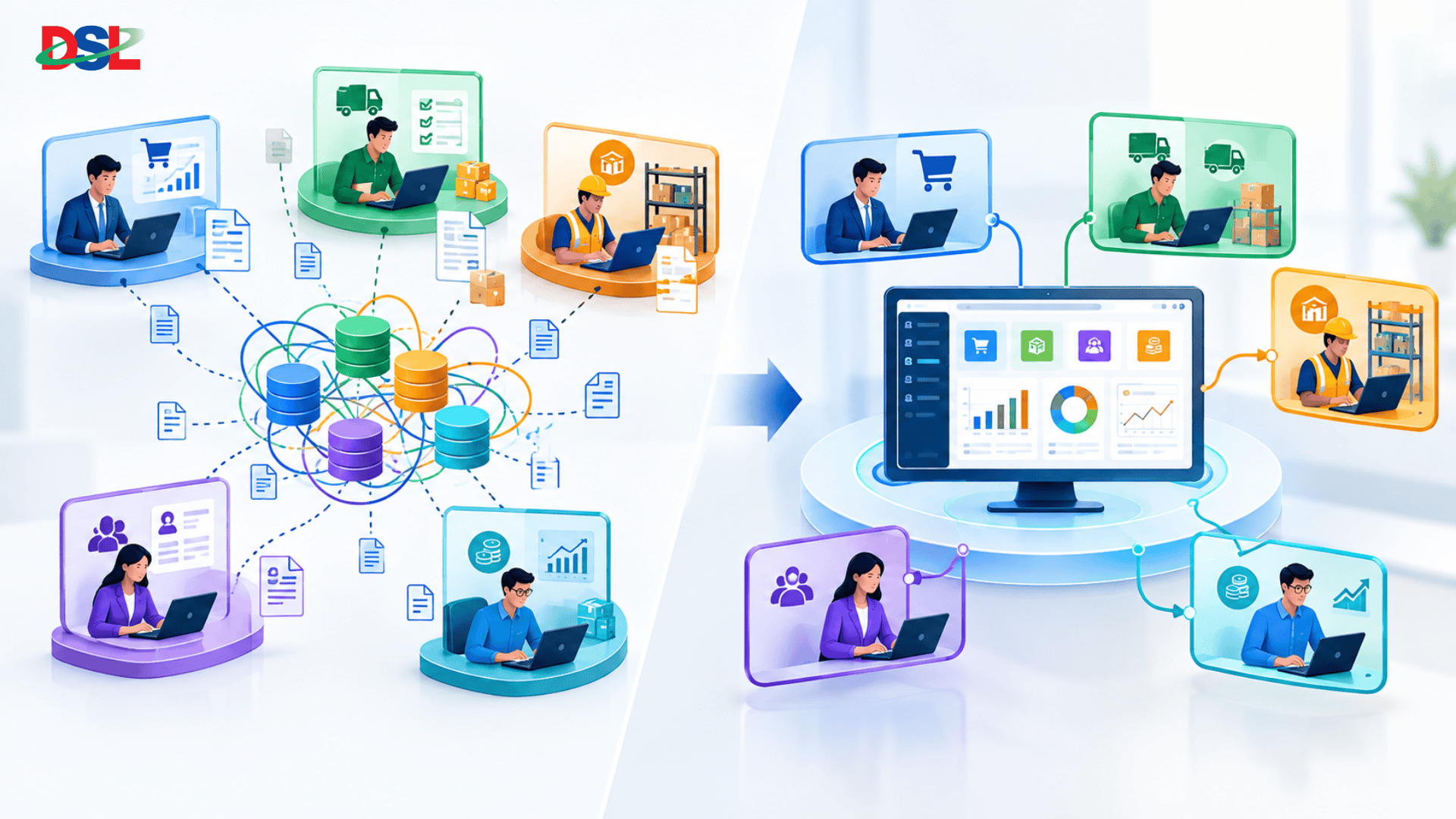 A growing business generates financial information from many different sources.
Sales teams create orders and invoices.
Procurement teams manage purchases and suppliers.
Warehouse teams manage inventory movements.
HR teams manage employee information and payroll.
Finance teams manage payments, expenses, receivables, and reporting.
When every department uses a different tool, information often becomes fragmented.
Finance teams may need to collect data from multiple departments before preparing a report. Employees may enter the same information more than once. Management may have difficulty getting a complete picture of current business performance.
The problem is not necessarily the lack of data.
The problem is disconnected data.
An integrated ERP system addresses this challenge by connecting business processes within one centralized platform.
What Makes an ERP System Different?
 Traditional business software often focuses on a specific function.
One system may handle accounting. Another may manage inventory. Another may handle HR. Sales teams may use a separate CRM.
Each application can work independently, but the information may not automatically move between them.
ERP takes a different approach.
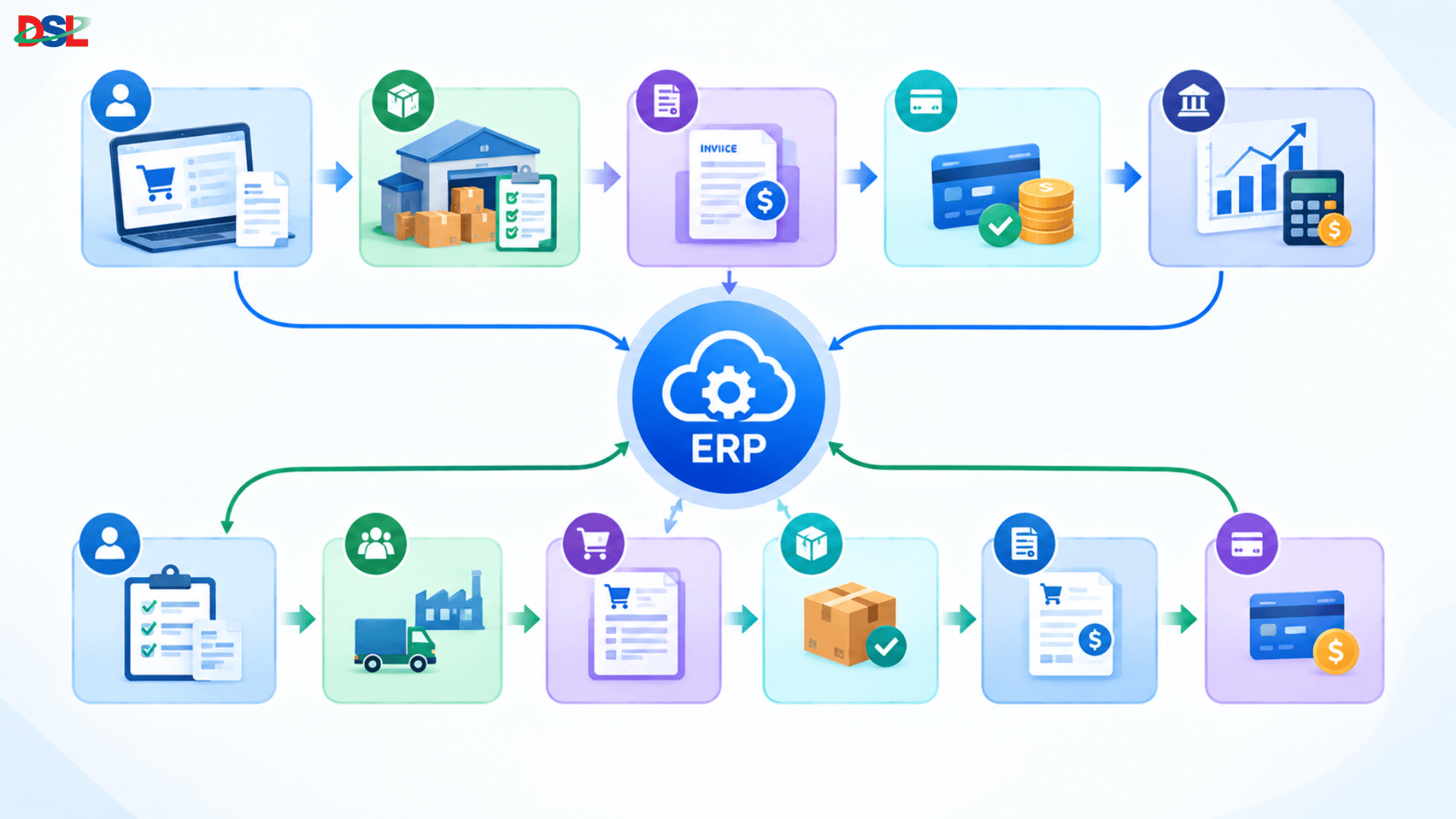
An ERP system connects multiple business functions and allows related information to flow between them.
For example:
Sales Order - Inventory Update - Invoice - Payment - Financial Record
A purchase can follow another connected process:
Purchase Request - Supplier - Purchase Order - Goods Receipt - Supplier Invoice - Payment
Instead of treating each activity as an isolated transaction, ERP connects the complete business workflow.
How ERP Connects Finance With Business Operations
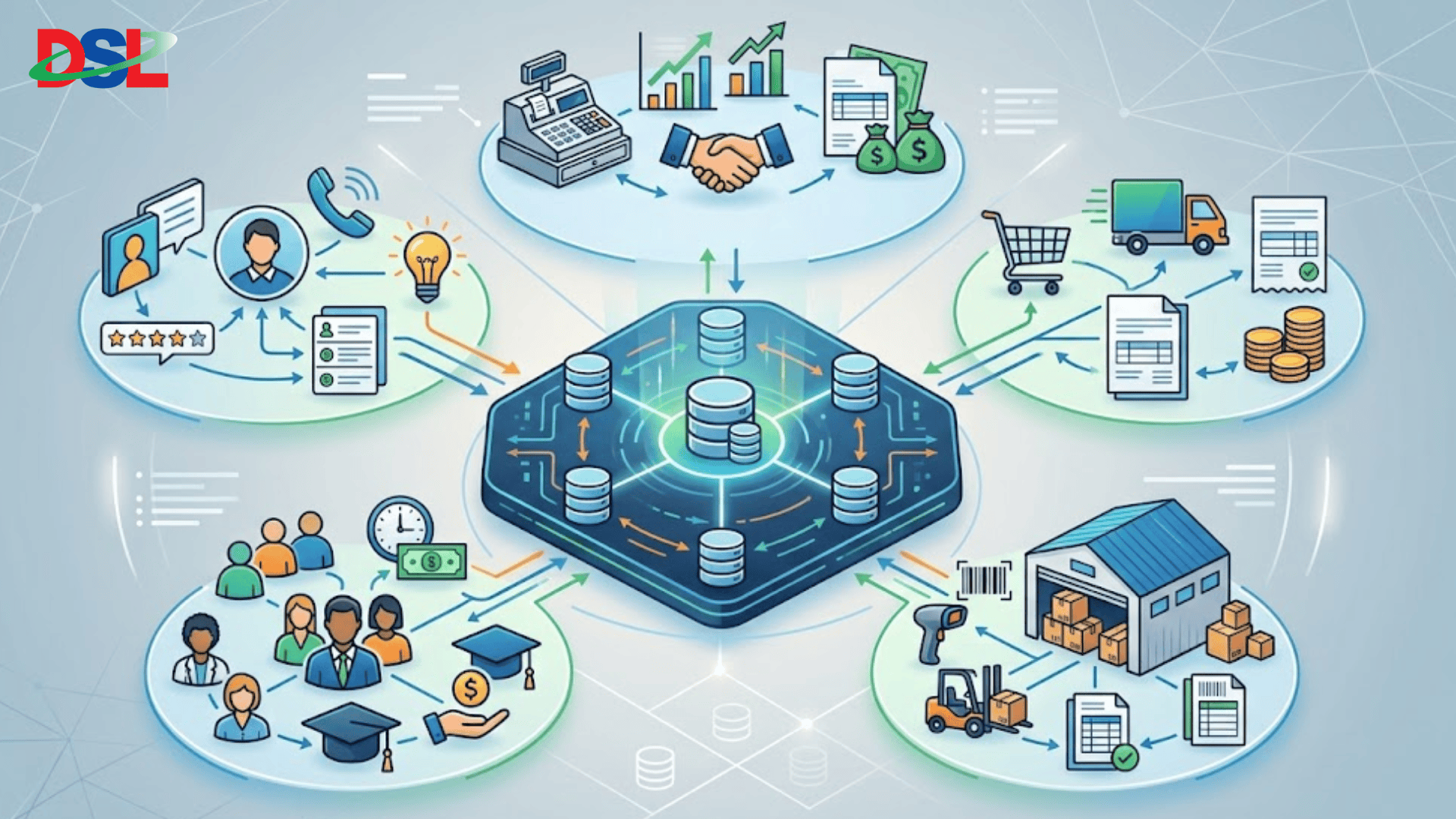 Financial information is created throughout the organization.
This makes integration particularly important.
Sales and Finance
When a customer places an order, the transaction can be connected with invoicing, payment tracking, customer records, and financial reporting.
This creates a clearer connection between sales activity and revenue.
Procurement and Finance
Purchasing activities affect both suppliers and company expenses.
An integrated ERP system can connect purchase orders, supplier invoices, payments, and financial records within the same workflow.
Inventory and Finance
Inventory is not simply a warehouse function.
Stock purchases, sales, returns, adjustments, and inventory valuation can all have financial implications.
Connecting inventory with financial management gives businesses a more complete view of operational and financial activity.
HR and Finance
Employees are a major part of business operations and expenses.
Payroll, employee benefits, attendance, and other HR information can be connected with financial processes to provide better visibility into workforce-related costs.
CRM and Finance
Customer relationships also affect revenue.
Connecting CRM and financial information allows businesses to better understand customer transactions, invoices, payment status, and business value.
The Business Value of Integrated ERP
The primary advantage of ERP is not simply having more software features.
It is the ability to connect information and processes.
1. One Connected Source of Business Data
When departments maintain separate databases, information can become inconsistent. ERP provides a centralized environment where authorized users can work with connected business information. This can reduce duplicate records and make it easier to maintain consistent data across departments.
2. Less Manual Data Entry
Manual data entry takes time and can introduce errors. When a transaction automatically flows between connected modules, employees do not need to repeatedly enter the same information.
For example, a sales transaction can connect with inventory, invoicing, customer records, and accounting. This can reduce repetitive administrative work.
3. Faster Access to Financial Information
Management often needs answers to questions such as:
How much did we sell this month?
Which invoices are outstanding?
What are our current expenses?
How much inventory do we have?
How much do we owe suppliers?
Which business areas are generating revenue?
An integrated ERP system can bring relevant information together through centralized reports and dashboards.
4. Better Financial Visibility
Financial performance should not be viewed separately from operational performance. Revenue, expenses, inventory, procurement, payroll, and customer activity are interconnected. ERP helps management view these relationships through a unified business system.
5. Improved Control Over Business Processes
ERP can provide structured workflows, user permissions, approval processes, and transaction records. This can help organizations establish greater control over how financial and operational activities are processed.
6. More Efficient Reporting
Preparing reports manually can require information from several departments. With integrated ERP data, reporting can become more structured and efficient. Businesses can generate reports based on connected information instead of manually combining data from different systems.
ERP Helps Turn Business Data Into Business Insight
Having data is not enough. Businesses need to understand what the data means. Consider a company that sees increasing sales but also experiences increasing expenses. Looking only at sales data may suggest positive growth.
However, when sales, procurement, inventory, expenses, and financial information are analyzed together, management can gain a broader understanding of what is happening within the business.
This is one of the important roles of ERP. ERP connects the data behind the business. That connection can help organizations move from simply recording transactions to understanding business performance.
What Should Businesses Look for in an ERP System?
Choosing an ERP system requires more than looking at a list of features.
The system should fit the organization's actual business processes.
Integrated Modules
Look for an ERP platform that can connect relevant functions such as:
Accounting and Finance
Sales and CRM
Inventory
Procurement
Human Resources
Payroll
Manufacturing
Customer Management
Reporting and Analytics
Not every business needs every module. The important factor is whether the system can support the processes that matter to the organization.
Real-Time or Up-to-Date Information
Business decisions depend on current information. An ERP system should provide timely access to relevant operational and financial data.
Flexible Reporting
Different departments need different information. Finance teams may need financial statements and payment reports, while management may need sales, profitability, inventory, and performance dashboards.
Role-Based Access
Financial and business information should not be accessible to everyone in the same way. An ERP system should support appropriate user roles and permissions.
Scalability
Business requirements change over time. The ERP system should be capable of supporting additional users, transactions, departments, branches, and business processes as the organization grows.
Customization and Integration
Every business has its own workflow. ERP customization and integration capabilities can help organizations adapt the system to their operational requirements and connect it with other necessary platforms.
When Is It Time to Move to an ERP System?
There is no single business size at which every company must adopt ERP.
However, certain challenges can indicate that an organization has outgrown disconnected systems.
These may include:
Increasing manual work
Multiple spreadsheets for business management
Duplicate data entry
Separate systems for different departments
Difficulty preparing accurate reports
Limited visibility into cash flow
Growing inventory complexity
Increasing numbers of customers and suppliers
Multiple branches or business locations
Difficulty tracking business performance
When these challenges begin affecting daily operations, an integrated ERP system can provide a more structured approach to managing business information.
ERP Implementation Is More Than Software Installation
Choosing ERP software is only one part of an ERP project. Successful implementation also requires understanding the organization's processes.
A typical ERP implementation may involve:
Business Analysis
Process Mapping
ERP Configuration
Data Migration
Integration
Testing
User Training
Deployment
Support
The goal should not be to simply move existing processes into new software. Businesses should identify where processes can be simplified, standardized, automated, or improved. This makes ERP implementation a business transformation project as much as a technology project.
The Future of Business Management Is More Connected
 Businesses are generating more data than ever before. At the same time, customers expect faster service, management needs quicker information, and organizations need greater control over their operations.
Disconnected software can make this increasingly difficult.
An integrated ERP environment creates a foundation where different business functions can work together.
With technologies such as automation, analytics, cloud computing, and artificial intelligence becoming increasingly important in business software, the role of ERP is also expanding.
The future of ERP is not simply about managing transactions. It is about creating a connected business environment where information can support better processes, visibility, and planning.
Final Thoughts
Financial management is closely connected to every major business activity.
Sales generates revenue.
Procurement creates purchasing commitments.
Inventory represents business resources.
HR manages workforce costs.
Customers generate transactions.
Finance brings these activities together.
Managing these functions separately can create information gaps.
An integrated ERP system connects them.
For businesses looking to improve operational visibility, reduce repetitive processes, strengthen financial control, and build a more connected management environment, ERP can provide a structured foundation for digital transformation.
The right ERP system should not simply automate accounting.
It should connect the entire business.
Build a More Connected Business With Daffodil Software
Daffodil Software Ltd. helps businesses move toward integrated digital operations with ERP solutions designed around their business requirements.
From finance and accounting to sales, CRM, inventory, procurement, HR, payroll, and reporting, an integrated ERP environment can bring essential processes together on one platform.
With the right technology and implementation strategy, businesses can create a more connected way to manage operations, monitor performance, control resources, and plan for growth.