In today’s competitive business environment, companies need more than standard tools to manage their day-to-day operations. Off-the-shelf software can provide useful features, but it may not always match the unique workflows, processes, and goals of a business.
Custom software development offers a more flexible approach. Instead of adapting your business processes to fit a pre-built application, custom software is designed around your specific requirements. From automating repetitive tasks to connecting different business systems, the right software solution can transform how your organization operates.
What is Custom Software?
Custom software is a software application specifically designed and developed to meet the requirements of a particular business, organization, or industry.
Unlike generic software, custom solutions can be built around your existing workflows, operational challenges, customer requirements, and future growth plans.
For example, a business may need a solution that combines customer relationship management, inventory tracking, reporting, accounting, employee management, and workflow automation in one platform. Rather than using several disconnected applications, a custom software solution can bring these processes together.
Why Businesses Are Turning to Custom Software
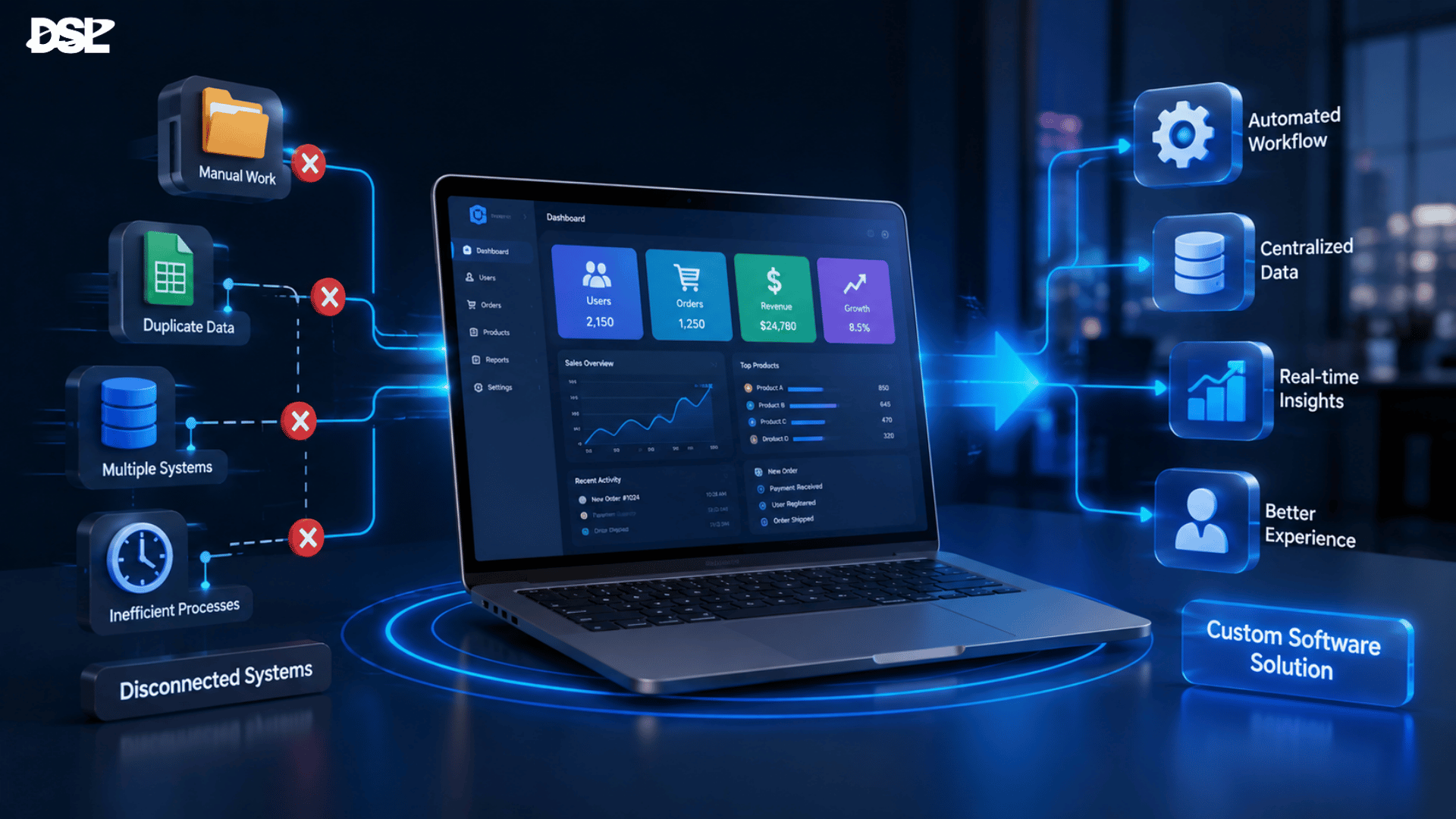 Every business operates differently. Two companies in the same industry may have completely different workflows, approval processes, customer journeys, and reporting requirements.
Generic software often forces organizations to work within predefined features. This can result in unnecessary manual work, multiple systems, duplicate data entry, and inefficient processes.
Custom software provides an opportunity to build technology around the way your business actually works.
Here are some of the key ways custom software can transform business operations.
1. Automate Repetitive Business Processes
Manual tasks consume valuable employee time and can increase the risk of human error.
Custom software can automate repetitive processes such as:
Data entry
Invoice generation
Employee approvals
Order processing
Customer notifications
Report generation
Inventory updates
Document management
Workflow approvals
By automating routine activities, employees can spend more time on tasks that require creativity, strategic thinking, and customer interaction.
2. Improve Operational Efficiency
Business efficiency depends on how quickly and accurately information moves through an organization.
When employees rely on spreadsheets, emails, paper documents, and multiple disconnected applications, processes can become slow and difficult to manage.
A custom software solution can centralize important business processes into a single system. Employees can access the information they need, follow standardized workflows, and complete tasks more efficiently.
The result can be a smoother operational process with fewer unnecessary steps.
3. Connect Your Business Systems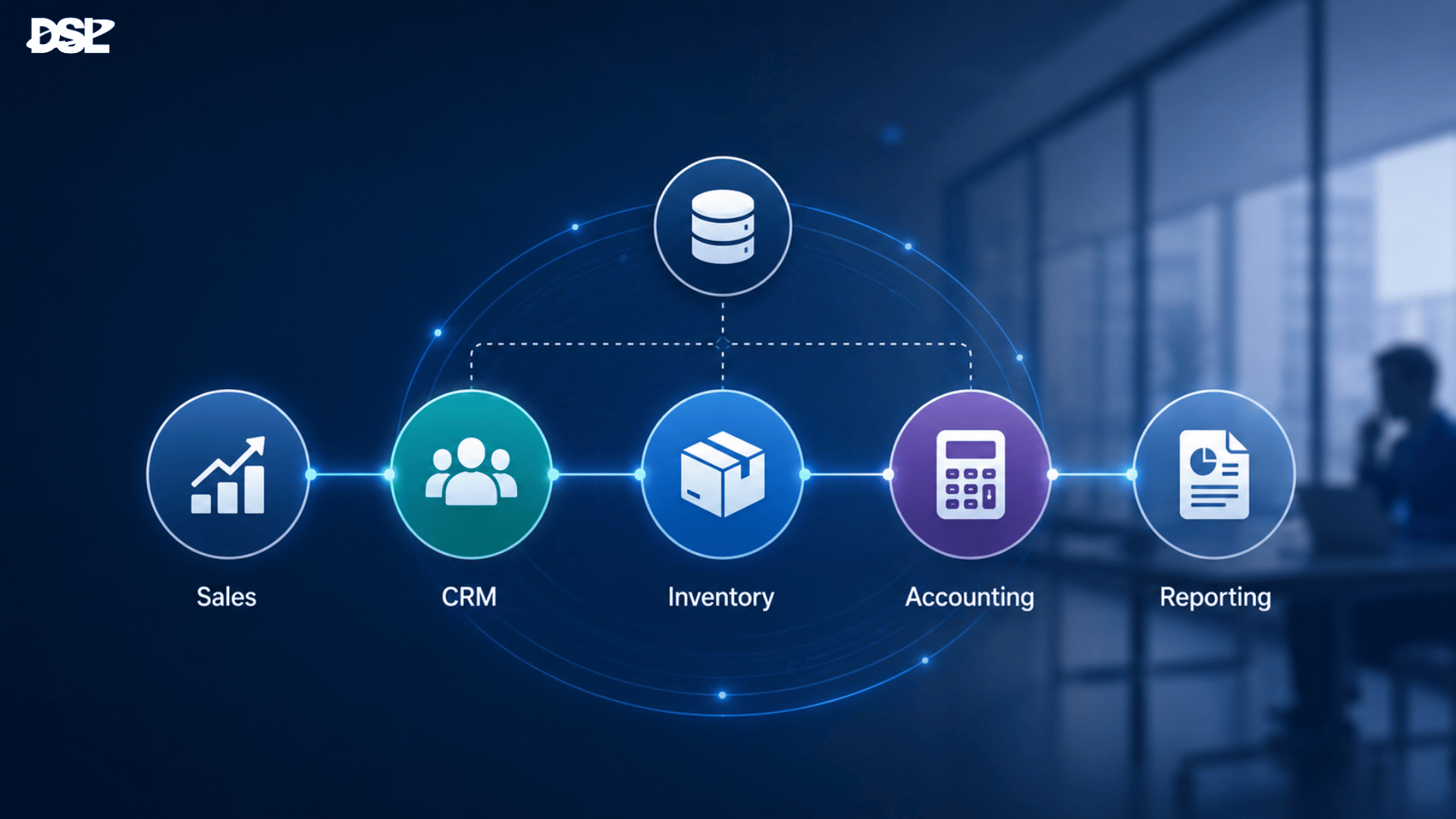
Many organizations use multiple software applications for different departments. While each system may serve a specific purpose, disconnected applications can create information silos. Custom software can integrate different systems and technologies to create a more connected business environment.
For example, a custom platform could connect:
Sales → CRM → Inventory → Accounting → Reporting
When systems communicate with each other, information can move automatically between departments instead of requiring employees to transfer data manually.
This can improve data consistency and reduce duplicated work.
4. Make Better Business Decisions With Data
Business decisions are stronger when they are based on accurate and accessible information.
Custom software can include dashboards, analytics, and reporting tools that provide real-time visibility into important business activities.
Depending on the business, management may be able to monitor:
Sales performance
Revenue
Inventory levels
Customer activity
Employee productivity
Operational costs
Project progress
Business trends
Instead of spending hours collecting information from different sources, decision-makers can access relevant data from a centralized platform.
5. Create Better Customer Experiences
Customer expectations continue to increase. Businesses need to provide fast, convenient, and consistent experiences across different touchpoints.
Custom software can help businesses build customer-focused processes around their specific requirements.
For example, a company can develop customized customer portals, service management platforms, booking systems, mobile applications, or CRM solutions.
By connecting customer information and automating communication, businesses can respond faster and provide more personalized services.
6. Improve Data Security and Access Control
Business information can include sensitive customer, financial, operational, and employee data.
Custom software can be developed with security requirements specific to the organization. Businesses can implement role-based access, authentication, permissions, activity monitoring, and other security measures based on their needs.
This allows organizations to control who can access specific information and functionality.
Security requirements should be considered from the beginning of the software development process rather than treated as an afterthought.
7. Build Software That Scales With Your Business
A solution that works for a small organization may not be sufficient as the company grows.
Custom software can be designed with future expansion in mind. New features, users, integrations, workflows, and business requirements can be added as the organization evolves.
For example, a growing company may initially require a basic sales management system. Later, it may need inventory management, advanced reporting, mobile access, third-party integrations, or AI-powered automation.
A scalable software architecture can make it easier to support these changing requirements.
8. Reduce Dependence on Multiple Software Tools
Using too many software platforms can increase complexity and operational costs.
Employees may need to switch between different applications to complete a single task. Information can become fragmented, and businesses may end up paying for features they rarely use.
A custom software solution can combine essential functionality into a platform designed around the organization's actual requirements.
This can simplify workflows and give employees a more consistent experience.
9. Support Industry-Specific Requirements
Some industries have specialized workflows that generic software cannot fully support.
Healthcare, manufacturing, logistics, education, finance, retail, and other industries may require specialized features, integrations, compliance processes, or reporting capabilities.
Custom software can be developed specifically around these requirements.
This allows businesses to create solutions that support their unique operational model rather than changing their processes to accommodate generic software.
How to Successfully Implement Custom Software
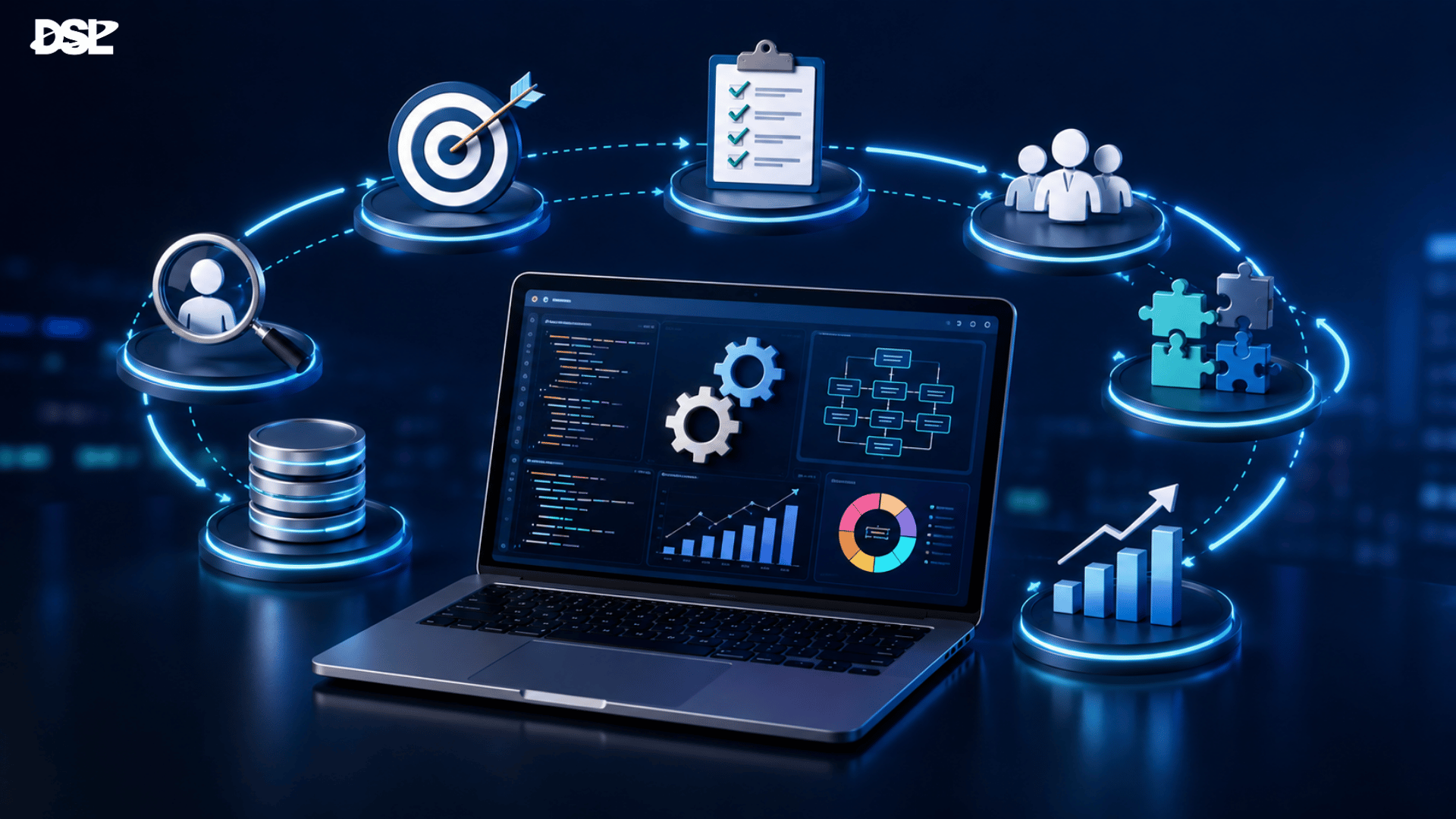
Developing custom software is not simply about creating an application. The solution should address real business problems and deliver measurable value.
A successful implementation generally starts with:
1. Identify Business Challenges
Determine which processes are inefficient, time-consuming, expensive, or difficult to manage.
2. Define Clear Requirements
Identify the features, workflows, integrations, users, and business goals the software needs to support.
3. Prioritize Essential Features
Start with the functionality that provides the greatest operational value. Additional features can be introduced as the solution evolves.
4. Focus on User Experience
Software should be easy for employees and customers to understand and use. A technically powerful system is less effective if users struggle with it.
5. Plan for Integration
Consider how the new software will communicate with existing applications, databases, APIs, and third-party services.
6. Measure Business Results
Track improvements such as reduced processing time, lower operational costs, increased productivity, improved customer satisfaction, or faster decision-making.
The Long-Term Business Value of Custom Software
Custom software should be viewed as a strategic business investment rather than simply another technology expense.
When properly designed and implemented, it can help organizations:
Increase productivity
Reduce manual work
Improve operational visibility
Minimize errors
Connect business systems
Improve customer service
Support data-driven decisions
Strengthen process control
Adapt to changing business requirements
Create opportunities for future growth
The biggest advantage is that the technology can evolve alongside the business.
Build a Software Solution Around Your Business
Every organization has different processes, challenges, and growth objectives. The right software should support those differences rather than force your business into a predefined system.
With the right custom software development partner, businesses can transform manual processes, connect disconnected systems, automate workflows, and build technology that supports long-term growth.
Daffodil Software Ltd. provides custom software development services designed around unique business requirements. From business applications and workflow automation to system integration and scalable software solutions, the right technology can help turn operational challenges into opportunities for improvement.
If your existing software is limiting your business or your teams are spending too much time managing manual processes, it may be time to explore a custom solution designed specifically for your organization.