Artificial intelligence is progressing beyond experimentation. In 2026, businesses will want to know how best to use AI to automate processes, understand data, improve customer experiences, and help them make faster decisions.
However, not every business challenge can be solved with a pre-built AI technology.
Generic AI applications are intended for a wide range of use scenarios. Businesses with specialized procedures, private data, industry-specific requirements, or complex software systems often need more flexibility. This is when custom AI software development becomes useful.
Instead of adapting business processes to a pre-built AI solution, organizations can create intelligent software based on their specific goals, data, users, and workflows.
Custom AI software may help businesses plan their next stage of digital transformation by laying the groundwork for more intelligent, scalable, and connected applications.
What is Custom AI Software Development?
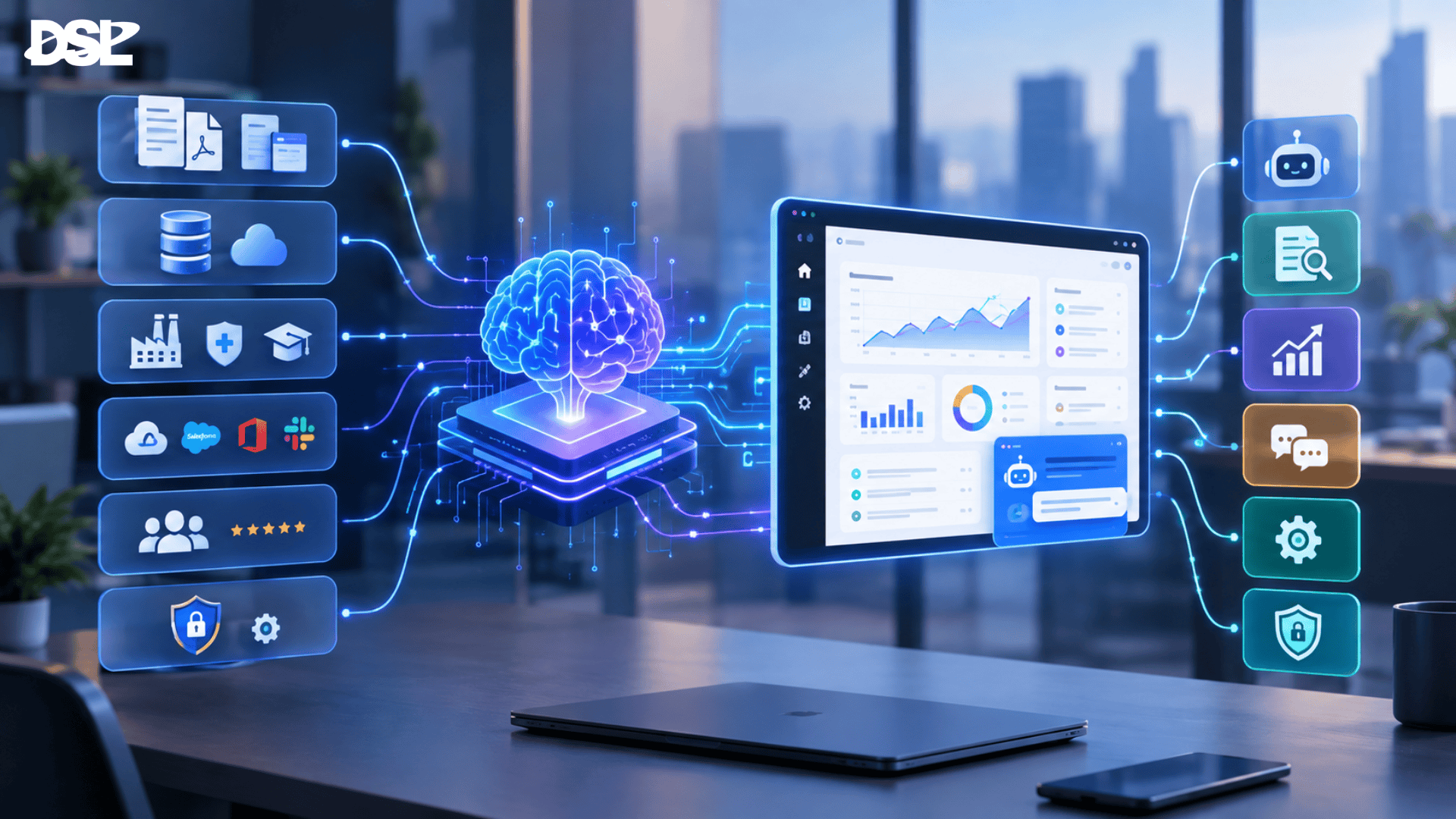
Custom AI software development is the process of creating and developing AI-powered software to meet the unique business needs of a company.
Instead of giving the same functionality to every customer, a custom AI solution can be built around:
Specific business processes
Company data and knowledge
Industry requirements
Existing software systems
Customer needs
Security and access requirements
Automation opportunities
Long-term business objectives
For example, a company may require an AI system capable of analyzing internal documents, assisting personnel, forecasting demand, automating customer contact, identifying patterns in corporate data, or connecting information across numerous apps.
Rather than employing multiple disconnected AI tools, these capabilities can be integrated into a purpose-built software system.
This makes custom AI development more than simply adding a chatbot or connecting an application to an AI model. It involves designing an intelligent system that works within the organization's technology environment and solves a clearly defined business problem.
Why Businesses Are Moving Toward Custom AI Solutions
The widespread use of generative AI has made artificial intelligence more accessible. Businesses can now use ready-made tools to write, summarize, research, provide customer service, code, and perform a range of other daily tasks.
But accessibility does not often guarantee suitability.
A general-purpose AI tool may not identify a company's procedures, organizational conventions, confidential information, or industry-specific workflows. Connecting AI to business systems and creating appropriate security and access controls may need additional development.
This gap is bridged by custom AI software development, which designs solutions around the company rather than expecting the business to work around the technology.
1. Automate Complex Business Workflows
Traditional software automation typically follows predetermined principles. AI can add another layer by analyzing documents, text, photographs, requests, and other types of data before deciding what action to take next.
Businesses can employ custom AI to support procedures like these:
Document processing
Customer inquiry handling
Data classification
Report generation
Workflow routing
Employee assistance
Lead qualification
Information extraction
Automated notifications
The goal is not just to automate everything. It aims to eliminate repetitive work while allowing employees to focus on activities that require human judgment and skill.
2. Turn Business Data Into Actionable Insights
Businesses create huge amounts of data through sales, finance, human resources, customer contacts, operations, inventories, and other activities.
Having data is one thing. Another requirement is the ability to understand things quickly.
AI-powered applications can assist decision-makers by identifying trends, summarizing information, detecting anomalies, forecasting, and presenting pertinent insights.
A custom solution can also be tailored to the unique metrics and information that are important to a given organization.
3. Build More Relevant Customer Experiences
Customers increasingly expect fast and personalized interactions.
Custom AI applications can support customer-facing experiences through:
Intelligent virtual assistants
AI-powered search
Personalized recommendations
Automated customer responses
Voice-enabled applications
Customer data analysis
Intelligent self-service portals
Because these systems can be connected with relevant business information, they can be designed to provide more context-aware assistance than a standalone generic tool.
4. Integrate AI With Existing Business Software
Businesses rarely use a single application.
An organization may already be utilizing ERP, CRM, HRM, accounting, POS, document management, cloud platforms, or custom apps.
Replacing all of these systems solely to implement AI may be impractical.
Custom AI software development enables intelligent capabilities to be integrated into an existing technological ecosystem using APIs and other integration techniques. This enables enterprises to implement AI without totally replacing their present infrastructure.
5. Create Software Around Unique Business Requirements
Every organization has its own processes.
A manufacturer may require predictive maintenance and quality inspections. A hospital may require clever patient and document workflows. A university may require AI-assisted academic services. Retailers may require demand forecasts and customer analytics.
Instead of forcing every business to use the same feature set, a custom AI application can be created to accommodate these differences.
Key Technologies Used in Custom AI Software Development
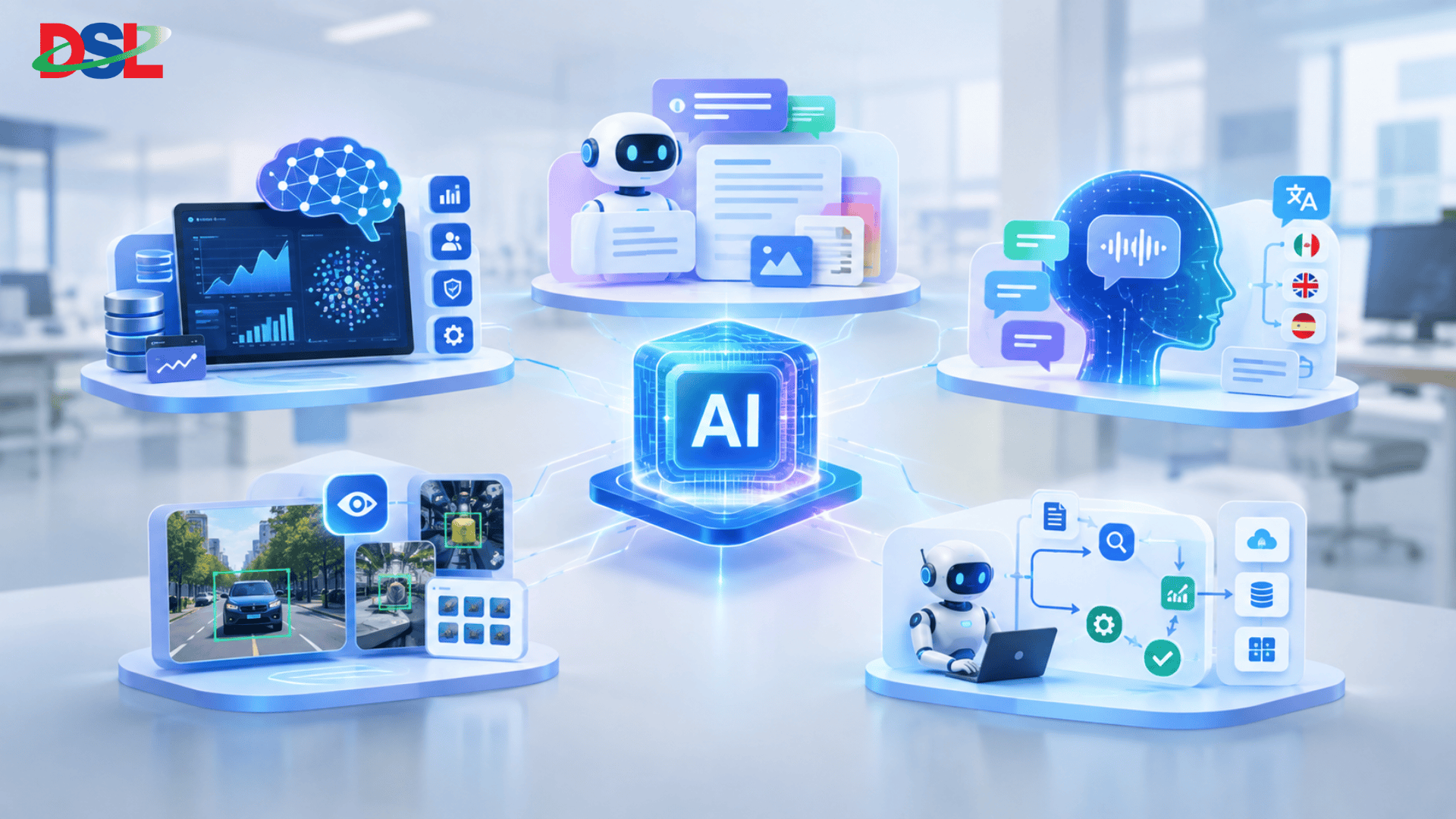 Custom AI does not depend on one technology. The appropriate technology stack depends on the business problem, available data, application requirements, and deployment environment.
1. Machine Learning
Machine learning can identify patterns in historical data and support prediction and classification tasks.
Potential applications include:
Demand forecasting
Sales prediction
Customer segmentation
Fraud detection
Recommendation systems
Risk analysis
Predictive maintenance
2. Generative AI and Large Language Models
Generative AI can enable applications that understand and produce natural language.
Businesses can use it for:
AI assistants
Intelligent document analysis
Knowledge-based question answering
Content generation
Report summarization
Internal search
Customer support
The key consideration is not simply which AI model to use, but how that model should work with the organization's data, permissions, workflows, and application environment.
3. Natural Language Processing
NLP enables software to process and understand human language.
It can support:
Chatbots
Text classification
Sentiment analysis
Document processing
Speech-to-text
Multilingual applications
Automated summarization
4. Computer Vision
Computer vision allows software to interpret images and video.
Depending on the use case, it can support:
Object detection
Image classification
Visual inspection
Image analysis
Video analysis
Recognition systems
5. AI Agents and Intelligent Automation
Another emerging direction is AI-powered agents that can perform multiple steps within a workflow rather than simply respond to individual questions.
For example, an AI agent could receive a business request, retrieve relevant information, analyze it, prepare an output, and trigger an approved action within connected software.
The design of these systems requires careful attention to permissions, validation, monitoring, and human oversight.
Where Can Businesses Use Custom AI Software?
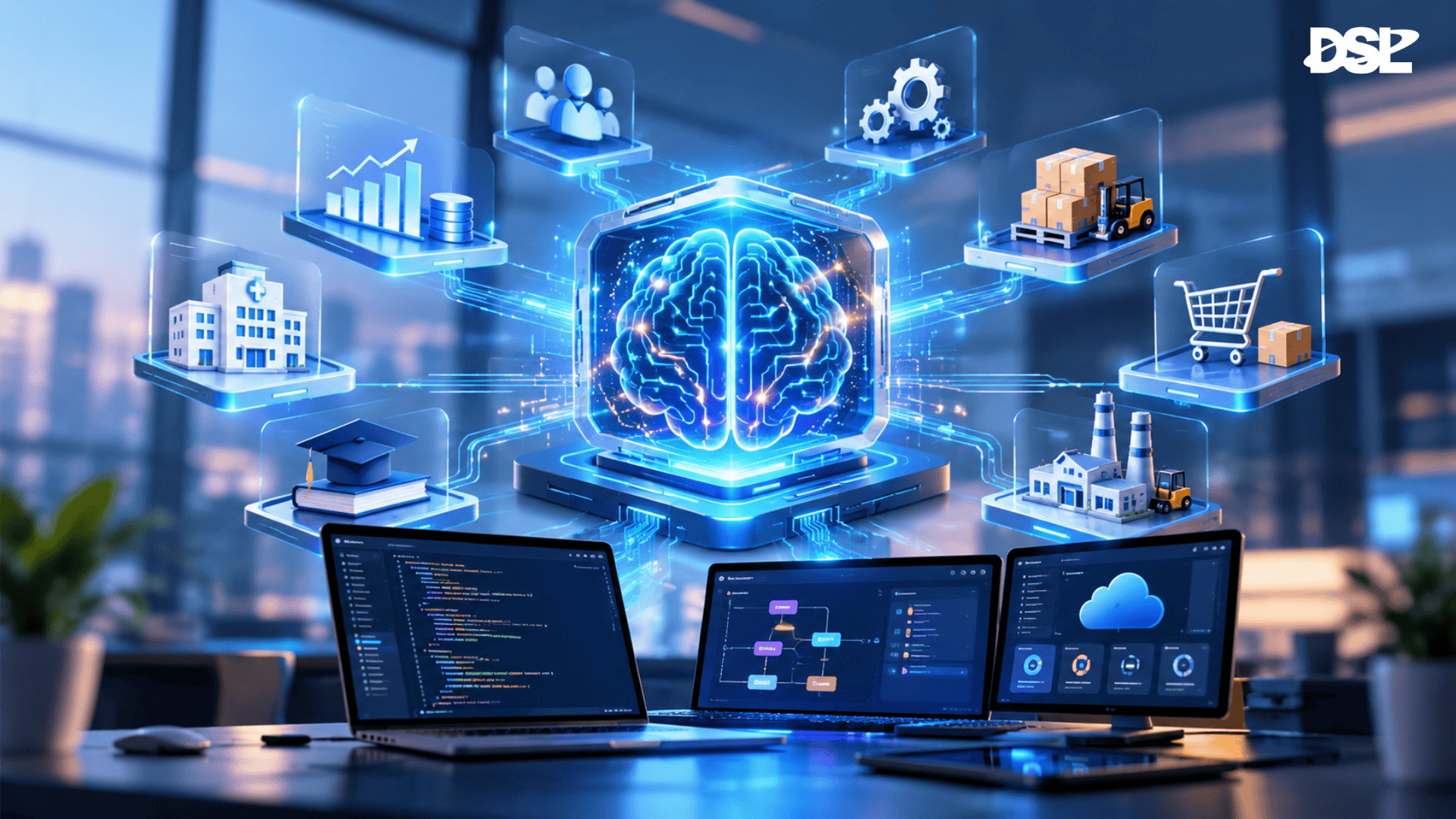 The flexibility of custom AI means that applications can be developed for many industries and departments.
Healthcare
AI can support healthcare organizations through intelligent scheduling, document processing, patient communication, data analysis, and workflow automation.
Retail and E-commerce
Retail businesses can explore AI for demand forecasting, product recommendations, customer analytics, inventory intelligence, and automated support.
Education
Educational organizations can use AI for personalized learning, academic assistance, student support, knowledge management, and administrative automation.
Finance
Financial organizations can apply AI to document processing, anomaly detection, customer support, risk analysis, and business intelligence.
Manufacturing
Manufacturers can use AI for predictive maintenance, quality inspection, production analysis, demand forecasting, and supply chain optimization.
Human Resources
AI can assist with recruitment workflows, employee support, document processing, workforce analytics, and HR knowledge management.
Hospitality
Hotels and hospitality businesses can use AI for guest communication, booking assistance, personalized services, operational analytics, and workflow automation.
The right use case depends on the organization's data, processes, technology infrastructure, and business objectives.
Custom AI Software Development Process
Building useful AI software requires more than selecting an AI model and writing application code. A structured development process helps ensure the final solution addresses a genuine business requirement.
1. Business Discovery and AI Strategy
The process begins by understanding the business problem.
This includes identifying:
Current workflow challenges
Repetitive tasks
Available business data
Existing applications
Potential AI use cases
Expected business outcomes
Technical and security requirements
The goal is to determine where AI can provide meaningful value rather than adding AI simply because it is a current technology trend.
2. Data Assessment and Preparation
AI depends heavily on the quality and accessibility of data.
During this stage, developers examine available data sources, identify gaps, clean relevant datasets, and establish an appropriate data structure.
Depending on the project, data may come from:
Business applications
Databases
Documents
APIs
Customer interactions
Operational systems
Internal knowledge repositories
3. Solution Architecture and AI Model Selection
The next step is to determine how the AI capability will fit into the application.
This may involve selecting or combining technologies such as machine learning, NLP, generative AI, computer vision, or predictive analytics.
Architecture decisions also consider:
Scalability
Performance
Security
Integration
Infrastructure
Data access
Monitoring
4. Application and Model Development
The AI components are then developed and connected with the application.
Depending on the project, this could include developing models, AI assistants, APIs, dashboards, workflow automation, recommendation systems, or intelligent search functionality.
5. Testing and Validation
AI systems require testing beyond traditional software functionality.
The solution should be evaluated for:
Accuracy
Reliability
Response quality
Security
Performance
Data handling
Failure scenarios
Human validation can be particularly important for business processes where incorrect AI output could have significant consequences.
6. Deployment and Continuous Improvement
After testing, the solution can be deployed within the required environment.
AI applications should not necessarily be treated as finished once launched. Usage patterns, new data, changing business requirements, and model performance can create opportunities for continuous improvement.
Monitoring and ongoing optimization help the system remain useful as the organization evolves.
What Challenges Should Businesses Consider?
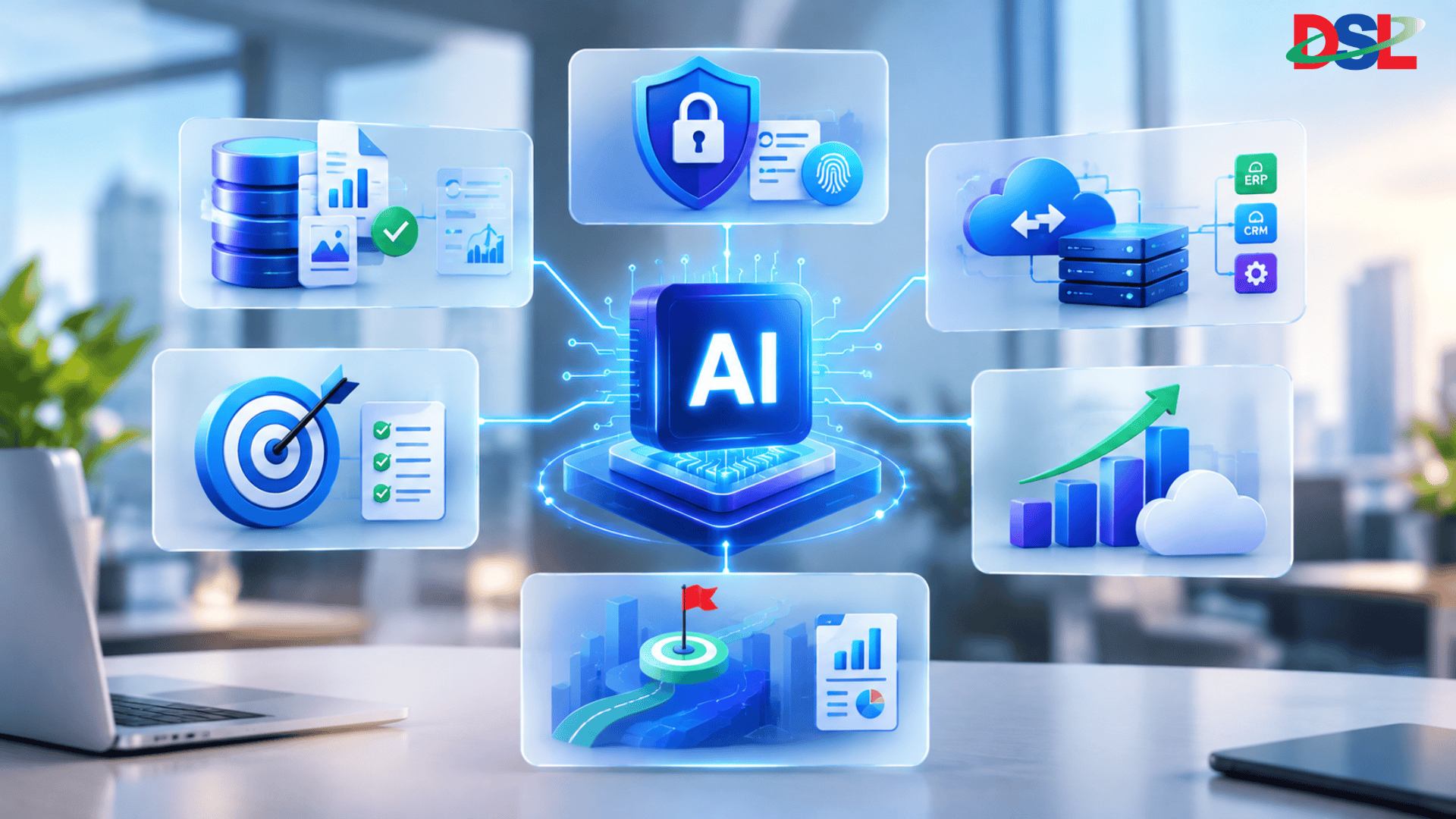 Custom AI software can create significant opportunities, but successful implementation requires careful planning.
1. Data Quality
Poor or inconsistent data can reduce the usefulness of AI systems. Data preparation should therefore be considered an important part of the project rather than an afterthought.
2. Security and Privacy
AI applications may interact with sensitive business or customer information. Access controls, secure infrastructure, data governance, and appropriate privacy practices should be considered during architecture and development.
3. Integration Complexity
Connecting AI with legacy applications, databases, ERP systems, CRM platforms, and third-party services can require careful technical planning.
4. AI Accuracy
AI outputs are not automatically correct. Applications should include appropriate validation, testing, monitoring, and human review where necessary.
5. Scalability
A solution that works for a small dataset or limited number of users may need architectural changes as adoption increases. Scalable design can help accommodate future growth.
6. Clear Business Objectives
Perhaps the most important consideration is defining what the AI solution is expected to accomplish.
A project should have a clear connection between the technology and a measurable business requirement.
How Daffodil Software Helps With Custom AI Software Development
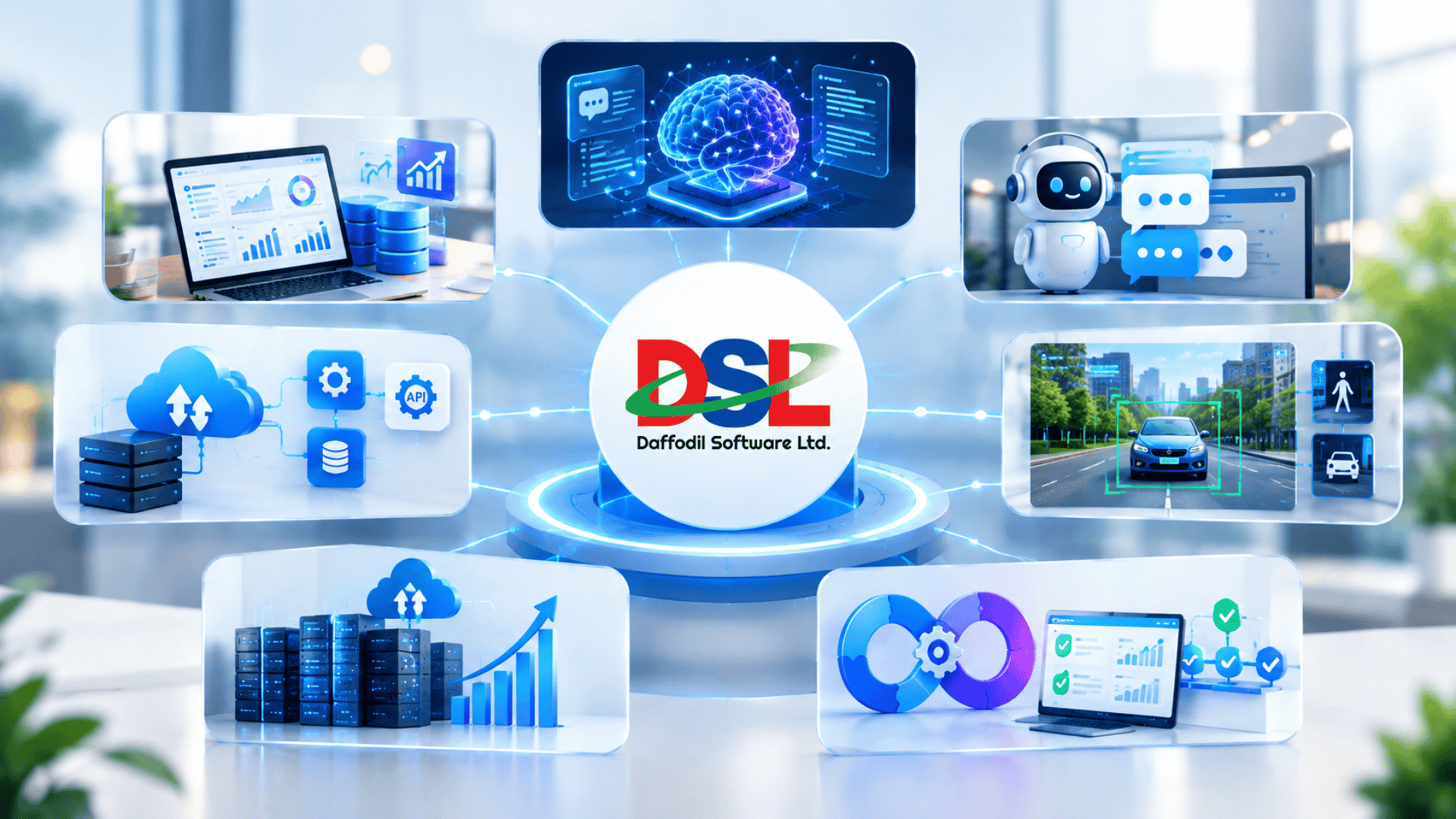
At Daffodil Software Ltd., we approach custom AI application development with business requirements, data, workflows, and long-term scalability in mind.
Our existing AI development service covers strategy and consulting, machine learning, NLP and conversational AI, AI integration and deployment, and computer vision solutions.
1. AI Strategy and Consulting
We help identify potential AI opportunities, assess AI readiness, plan data requirements, evaluate feasibility, and establish an AI roadmap.
This helps businesses begin with the right problem rather than starting with technology alone.
2. Custom Machine Learning Solutions
We develop machine learning solutions for use cases such as predictive analytics, classification, and data-driven forecasting.
Our development process can include data preparation, model development, training, optimization, testing, and deployment.
3. Generative AI and Conversational Applications
Businesses can develop intelligent assistants, chatbots, document-processing solutions, summarization systems, and other natural-language applications based on their specific requirements. These applications can help organizations automate communication, process information, and provide more personalized user experiences. As the technology evolves, AI is also moving beyond conventional chatbots toward agentic AI systems that can understand goals, plan tasks, interact with software, and perform actions with limited human intervention.
Note: Local companies are exploring agentic AI. An article published on August 19, 2026, in the Daily Star specifically reports that a growing number of Bangladeshi companies are developing agentic AI products and describes applications in customer engagement, business operations, and video intelligence.
**Reference: Bangladeshi companies look beyond chatbots with agentic AI
4. AI Integration With Existing Systems
AI does not always need to operate as a separate application.
We can integrate AI capabilities with existing business software and applications through APIs and other integration approaches, helping organizations introduce intelligent functionality into their current technology environment.
5. Computer Vision Development
For businesses working with images and video, we provide computer vision capabilities including image and video analysis, object detection and recognition, and automated visual inspection.
6. Scalable AI Architecture
AI applications need to accommodate changing data, users, and business requirements.
Our approach emphasizes scalable architecture so that solutions can evolve as the organization expands.
7. Testing, Deployment and Continuous Improvement
We use a structured development methodology that includes discovery, data preparation, model building, testing, deployment, monitoring, and continuous improvement.
This enables a development cycle in which the AI solution can change over time rather than being implemented once and for all.
Why Choose Custom AI Software Instead of a Generic AI Tool?
It is not always necessary to choose between custom and pre-built AI.
Generic tools might be useful for satisfying common productivity requirements and running quick experiments. Custom development is more significant when a corporation needs deeper integration, customized workflows, custom data handling, or functionality that ordinary solutions cannot provide.
A business may consider custom AI when it needs:
AI designed around specific business processes
Integration with existing ERP, CRM, or other software
Access to proprietary organizational knowledge
Industry-specific functionality
Greater control over application features
Scalable architecture
Customized automation
A dedicated AI-powered digital product
The important question is not whether custom AI is inherently necessary, but whether the organization's specific requirements justify building a tailored solution.
The Future of Custom AI Software Development in 2026
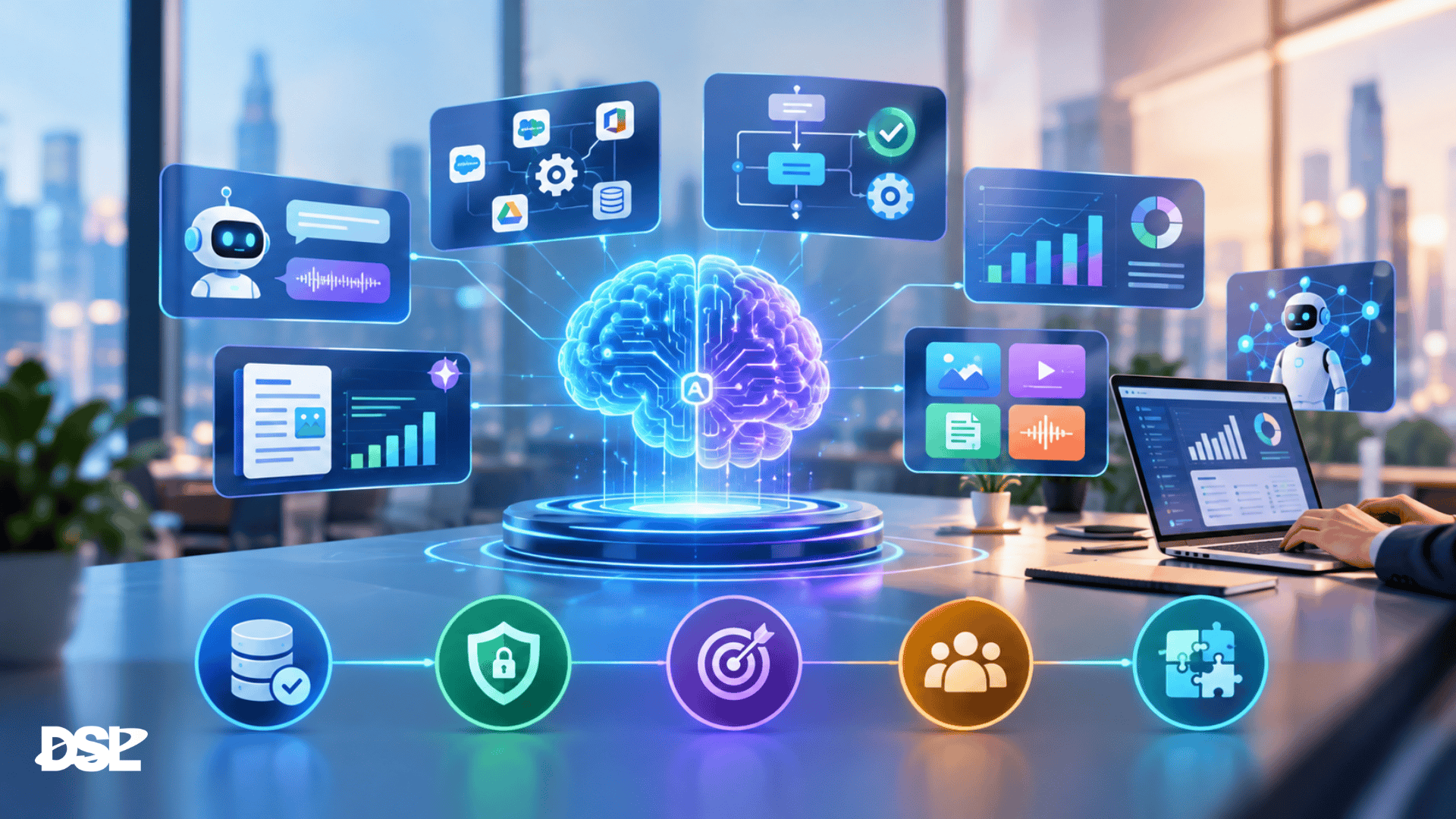 AI development is trending toward increasingly connected and action-oriented applications.
Businesses are searching for solutions that can analyze data, interact with business software, automate multi-step procedures, and provide cross-functional support.
Generative AI, intelligent agents, multimodal applications, predictive analytics, and AI-powered automation all contribute to this transformation.
At the same time, successful AI adoption will remain dependent on essentials such as trustworthy data, safe design, clear business objectives, adequate human oversight, and good integration.
As a result, the future entails more than simply embedding AI into software. It is about creating software that can use intelligence in ways that are actually valuable to the business.
Build Smarter Software With Daffodil Software Limited
Custom AI software development enables companies to design intelligent applications based on their own processes, data, customers, and objectives.
A well-designed AI solution can integrate into a company's digital infrastructure in a variety of ways, including AI strategy and machine learning, conversational AI, computer vision, system integration, and continuous optimization.
Daffodil Software Ltd. assists organizations in turning AI ideas into scalable applications that are tailored to real-world requirements. Our unique AI application development capabilities span the entire process, from discovery and data preparation to programming, testing, deployment, and improvement.